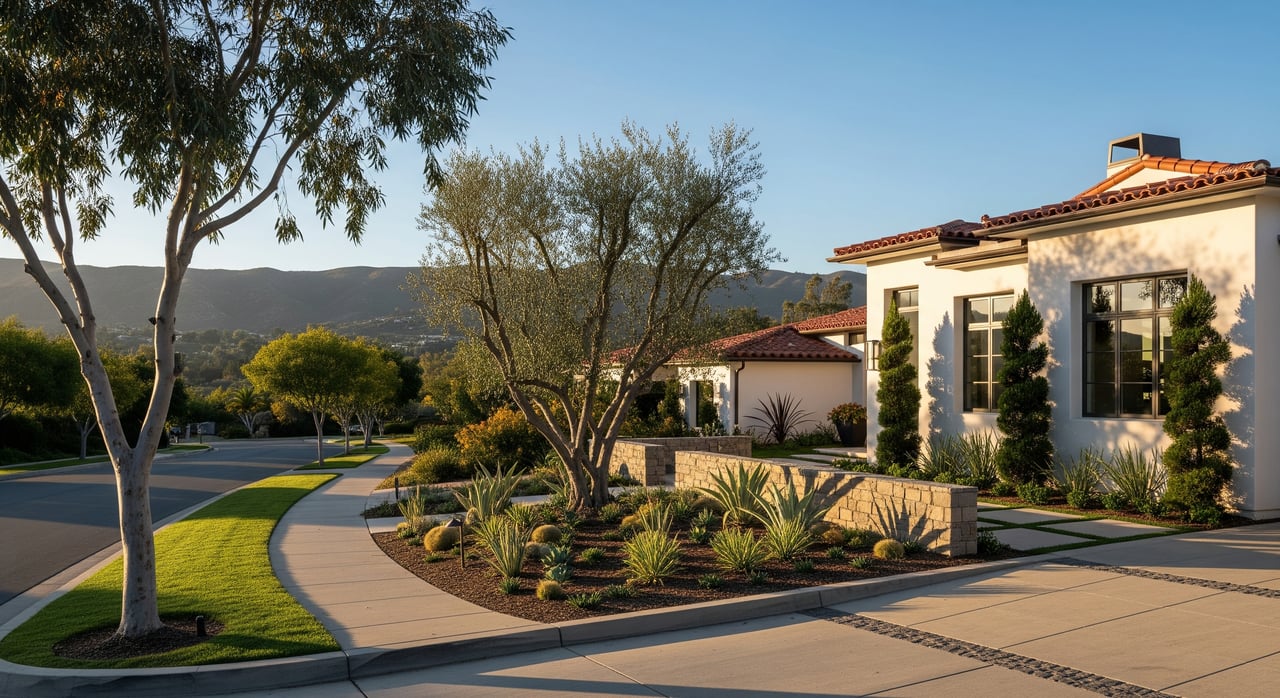
Trying to make sense of Carmel Valley’s different villages? You are not alone. Each area offers a distinct mix of home styles, HOA formats, parks, schools, and commute tradeoffs that can feel overwhelming when you are moving up. This guide breaks down Pacific Highlands Ranch, Torrey Hills, Del Mar Mesa, and central Carmel Valley so you can compare what matters and choose with confidence. Let’s dive in.
Carmel Valley at a glance
Carmel Valley sits in northwestern San Diego within the 92130 ZIP. It is mostly residential, bordered by I‑5 to the west and SR‑56 to the south, with open space around Los Peñasquitos Canyon and Del Mar Mesa. Daily life connects easily to nearby employment hubs like Sorrento Valley, Torrey Pines Research Park, UC San Diego, and UTC.
The community includes several planning subareas that locals often refer to as “villages.” The four most referenced for family buyers are Pacific Highlands Ranch, Torrey Hills, Del Mar Mesa, and the central or older parts often listed simply as Carmel Valley.
Compare the villages
Pacific Highlands Ranch (PHR)
PHR is one of the newest master‑planned communities in north San Diego, with development focused during the 2000s and 2010s. Neighborhoods were designed around open space corridors and habitat preserves.
- Homes and lots: Newer construction with a mix of detached homes, townhomes, and a few condos. Many single‑family homes sit on small to medium lots with modern, family‑friendly floor plans. Some enclaves offer larger, luxury lots.
- HOA and amenities: Master and sub‑HOAs are common. Expect maintained common areas, community parks, pools, tot lots, trails, and architectural standards.
- Lifestyle fit: You want newer homes, low exterior maintenance, modern layouts, and planned parks and trails.
- Commute and access: Convenient to SR‑56 and I‑5 with reasonable drives to Sorrento Valley and UTC.
Torrey Hills
Developed mainly in the 1990s and 2000s, Torrey Hills sits west of PHR near I‑5 and SR‑56. It blends single‑family tracts with multi‑family communities.
- Homes and lots: Mid‑ to late‑1990s homes plus townhomes and condos. You will see established landscaping and mature trees, and a range of lot sizes.
- HOA and amenities: Many neighborhoods have HOAs with pools, greenbelts, and playgrounds. Condo associations typically carry higher monthly dues than single‑family tracts.
- Lifestyle fit: You want a balance of relatively newer homes with mature streetscapes, quicker coastal access, and proximity to work centers.
- Commute and access: Close to I‑5 and SR‑56 for La Jolla, beaches, Sorrento, and UTC.
Del Mar Mesa
Del Mar Mesa delivers a quieter, low‑density setting with large lots and extensive preserved open space, including the Del Mar Mesa Preserve.
- Homes and lots: Larger single‑family homes, including custom and semi‑custom properties, often on expansive lots with canyon or hillside settings.
- HOA and amenities: More limited HOA oversight in many pockets. The focus is on trails and passive open space rather than clubhouses or pools.
- Lifestyle fit: You value privacy, acreage, and easy trail access. You prefer a less “planned” feel.
- Commute and access: Drives to UTC and Sorrento can be longer than from PHR or Torrey Hills due to location and road network.
Central / Older Carmel Valley
These are the earlier‑built neighborhoods, mainly from the 1970s through the 1990s, near Carmel Valley Road and Del Mar Heights Road.
- Homes and lots: A wide range of single‑family styles, including ranch and traditional. Many homes have been remodeled. Lot sizes are often larger than in newer master plans.
- HOA and amenities: Varies. Some pockets have HOA pools or parks, while others have none.
- Lifestyle fit: You want an established neighborhood with mature trees, larger yards, and a potential remodel opportunity for value.
- Commute and access: Convenient to retail along Del Mar Heights and El Camino Real, beaches, Torrey Pines, and central La Jolla.
Home age and resale factors
- Build eras: Central Carmel Valley spans the 1970s to 1990s. Torrey Hills generally runs 1990s to 2000s. PHR is largely 2000s to 2010s. Del Mar Mesa has fewer homes, many of them newer or custom.
- Floor plans: Across the area, 3 to 5 bedroom floor plans are common. Newer builds lean into open kitchens and indoor‑outdoor living. Older homes may have more segmented layouts that many owners update.
- Resale considerations: Pay attention to school boundaries, HOA rules for exterior changes, lot size and yard usability, and proximity to major employers. Newer PHR and some Torrey Hills tracts can carry premiums for low‑maintenance living. Del Mar Mesa’s larger lots and scarcity appeal to buyers who want privacy.
HOAs and what to check
HOA structures differ by village and property type. Master‑planned areas may include a master association plus tract‑level sub‑associations. Condo communities often have higher dues that cover building maintenance and insurance. Single‑family tracts usually have lower dues that focus on landscaping and shared areas.
Before you commit, request and review:
- CC&Rs, bylaws, and rules, including parking, rental policies, and architectural standards
- Current budget, reserve study, and financials, watching for underfunded reserves
- Minutes from recent board meetings, which can reveal upcoming assessments or common issues
- Insurance coverage and claims history
- Any pending litigation or capital projects
Practical tip: If you have young children, confirm the availability and location of pools, playgrounds, and guest parking. If rental flexibility matters, verify short‑term rental rules for the community.
Lifestyle, schools, and commute
- Recreation and open space: You will find strong access to parks and trails throughout the area, including the Del Mar Mesa Preserve. PHR and Del Mar Mesa are closely tied to preserved open space. Central Carmel Valley and Torrey Hills offer more immediate retail access and neighborhood parks.
- Schools: Carmel Valley is known for strong public schools, but district lines and attendance policies vary. Major districts serving parts of the area include San Dieguito Union High School District and local elementary districts. Always verify current boundaries for a specific address directly with the district before you rely on them.
- Commute times: Off‑peak, typical drives to UCSD and UTC or Sorrento Valley can range around 10 to 20 minutes, and downtown can be 20 to 30 minutes or more. Actual times depend on traffic and your exact location.
- Walkability and retail: Central areas near Del Mar Heights and El Camino Real offer convenient shopping and dining. Some PHR pockets have local market access. Del Mar Mesa is more car‑dependent.
Quick match guide
Use this short guide to align each village with your top priorities:
- Choose PHR if you want newer construction, planned parks, and a master‑planned setting with low exterior maintenance.
- Choose Torrey Hills if you want relatively newer homes with mature landscaping and convenient coastal access.
- Choose Del Mar Mesa if you want space, privacy, and trail access in a low‑density setting.
- Choose central Carmel Valley if you prefer larger lots, established streetscapes, and proximity to shopping, with the option to renovate for value.
Buyer checklist for move‑up families
As you compare homes and sub‑areas, verify the details that influence value and day‑to‑day living:
- School attendance boundaries and any recent changes
- HOA documents, rules, financials, and any special assessments
- Lot size, usable yard area, sun exposure, and potential for additions or ADUs based on local rules
- Age and condition of major systems like the roof, HVAC, windows, and plumbing
- Noise and environmental factors such as proximity to I‑5 or SR‑56, flight paths, and wildfire risk near open space
- Future development plans that could affect traffic or views
- Walkability to parks, stores, and schools, and commute times during typical rush hours
- Property tax rate, any Mello‑Roos or special district assessments, and the impact on your monthly payment
Your next step
If Carmel Valley is on your short list, start with your top two or three priorities. Do you value newer construction over lot size, or walkable retail over acreage and privacy? Then tour a few neighborhoods in each village to test your assumptions and verify the commute, school paths, and HOA details for specific addresses.
When you are ready for local guidance and a well‑managed process, we can help you compare sub‑areas, review HOAs, and coordinate a seamless sale and purchase. Connect with Conway & Associates to plan your move.
FAQs
What are the main Carmel Valley villages?
- Pacific Highlands Ranch, Torrey Hills, Del Mar Mesa, and central or older Carmel Valley are the primary sub‑areas buyers compare when searching in 92130.
How do HOAs differ across Carmel Valley?
- Many PHR and Torrey Hills tracts have master and sub‑associations with pools, parks, and trails, while central areas vary and Del Mar Mesa often has minimal HOA oversight with an emphasis on open space.
Which village has larger lots in Carmel Valley?
- Del Mar Mesa typically features larger lots and lower density, while central Carmel Valley often offers medium to larger lots compared with newer master‑planned tracts.
Are there Mello‑Roos taxes in Carmel Valley?
- Some master‑planned areas use special assessments such as Mello‑Roos, which can affect monthly carrying costs; confirm the specifics for each property before you buy.
How do school boundaries work in Carmel Valley?
- Boundaries vary by neighborhood and can change; verify attendance for a specific address directly with the serving districts before relying on it.
What are typical commute times from Carmel Valley?
- Off‑peak drives to UCSD, UTC, and Sorrento Valley often range around 10 to 20 minutes, and downtown can be about 20 to 30 minutes or more, depending on traffic and exact location.